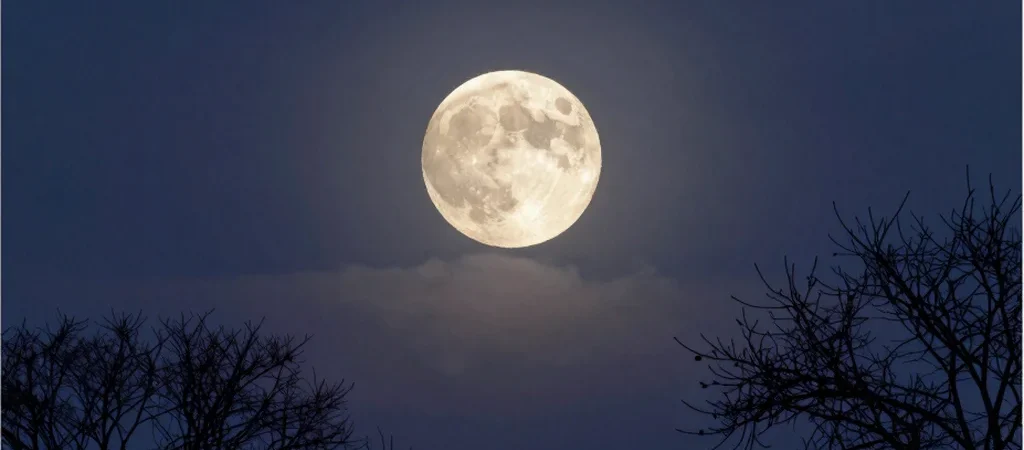
The moon rises over a row of houses, and suddenly it seems large enough to touch. Later, high above the same street, it looks smaller. That familiar shift is an illusion of perception: the moon’s apparent size in the sky stays nearly the same over the course of a single night.
The horizon adds comparison
Near the horizon, the moon shares the view with rooftops, trees, and distant buildings. Those familiar objects give your brain a sense of scale, making the moon seem especially large by comparison. High in an empty patch of sky, there are fewer visual landmarks to create that impression.
The atmosphere changes its look
A low moon also shines through more of Earth’s atmosphere than one overhead. Dust, haze, and other conditions can change its color or clarity, sometimes making it appear warmer or softer. That atmospheric effect is real, but it doesn’t mean the moon has expanded.
Try a simple comparison
Next time the moon looks huge, hold a small object at arm’s length and compare its apparent width with the moon. Repeat the check later, when the moon is higher. The moon should take up nearly the same amount of your view—a small experiment that separates what the sky is doing from what your perception is adding.